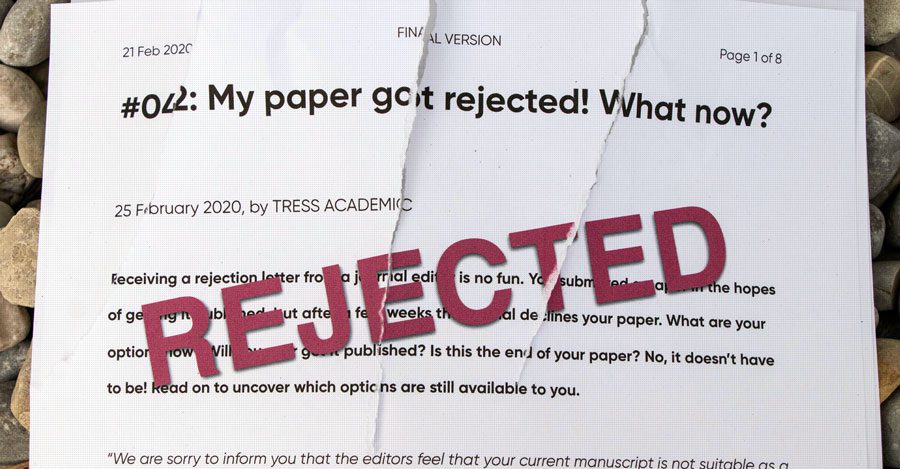
For a PhD scholar in India, few emails are as heart-stopping as the one from a journal editor. After months of work, you finally see the verdict: “Rejected” or “Major Revisions Required.”
It’s easy to feel defeated, frustrated, or even angry. But here is the most important secret of academic publishing: this is not a failure. A “Major Revisions” decision is a good sign. It means the editor and reviewers saw potential in your work. A rejection with comments is a free, expert-level roadmap to improving your paper.
The challenge is knowing how to respond. This guide will walk you through a professional strategy for turning peer review feedback into an acceptance.
The Golden Rules: How to Handle Peer Review Feedback
Your response to the reviewers is just as important as the changes you make to the paper.
- Wait 24 Hours. Your first instinct might be to argue. Don’t. Read the comments, feel the frustration, and then step away. Come back the next day with a clear, objective mind.
- Be Grateful and Polite. The reviewers are (usually unpaid) experts who have volunteered their time. Even if their comments seem harsh, begin your response letter by thanking them for their “insightful comments and valuable time.”
- Address Every Single Point. Do not ignore a single comment, even if it seems small or irrelevant. The key to success is being systematic and thorough.
Your 5-Step Strategy for a Successful Resubmission
Step 1: Create a “Response to Reviewers” Document
Create a new document. Copy and paste every single comment from the editor and each reviewer, one by one. Use a numbering system (e.g., Reviewer 1, Comment 1).
Step 2: Categorize the Feedback
Go through the comments and categorize them:
- Major Flaws: (e.g., “The methodology is unclear,” “The research gap is not well-defined,” “The data analysis is inappropriate.”) These are your top priority.
- Minor Fixes: (e.g., “Typo on page 5,” “The title is misleading,” “Table 3 is poorly formatted.”)
Step 3: Respond to Each Comment Systematically
Below each reviewer’s comment in your document, write your response.
- If you agree: Start with “We thank the reviewer for this excellent suggestion.” Then, clearly state what you changed in the manuscript and where (e.g., “We have now clarified the methodology in the ‘Data Collection’ section, Page 7, Paragraph 2.”).
- If you disagree (use this sparingly!): Be extremely polite and provide a strong, evidence-based rebuttal. Start with, “We appreciate the reviewer’s perspective on this point. However, we have chosen to retain our original phrasing because…” and then provide a clear, logical justification (e.g., citing a key paper that supports your method).
Step 4: Revise the Manuscript (Highlight Your Changes)
Make all the agreed-upon changes in your original paper. Use the “Track Changes” feature in Word or highlight the new text in a different color. This makes it easy for the editor and reviewers to see that you did the work.
Step 5: Write a New Cover Letter
When you resubmit, your cover letter should be brief and professional. Thank the editor for the opportunity to revise, state that you have addressed all reviewer comments in the attached manuscript, and mention that you have also included a point-by-point “Response to Reviewers” document.
Why Was Your Paper Rejected? (And How We Can Fix It)
Most rejections from UGC CARE or Scopus journals stem from a few common (and fixable) issues:
- The Research Gap Was Unclear: Your introduction failed to convince the editor why your research was necessary.
- Fatal Flaw in Methodology: Your methods were not robust, your sample size was too small, or you used an inappropriate analytical tool.
- Poor Language and Structure: The paper was difficult to read due to grammatical errors or a confusing structure (e.g., a weak IMRaD framework).
- Mismatch with Journal Scope: Your paper, while good, was simply not a good fit for that specific journal’s audience.
Don’t Face Rejection Alone. PhD India Can Help.
Navigating a “Major Revisions” request from a top Scopus journal is a high-pressure, complex task. It requires not just academic skill, but also a specific kind of diplomatic communication in the response letter.
At PhD India, we specialize in Research Paper Rejection and Revision Support. Our team of subject matter experts and academic editors has years of experience in the peer-review process. We will:
- Analyze all reviewer comments to understand the core issues.
- Help you craft a professional, systematic, and persuasive “Response to Reviewers” letter.
- Revise your manuscript to address all concerns—strengthening the introduction, clarifying the methodology, improving the analysis, or polishing the language.
- Ensure the entire resubmission package is flawless and professional.
We turn a “Major Revisions” decision into your best chance for publication.