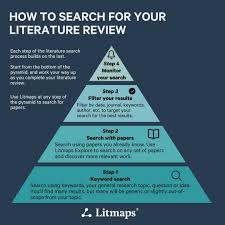
For many PhD scholars in India, the journey feels like climbing a mountain. While every step presents challenges, one particular section often feels like the steepest, most daunting climb: Chapter 2, the Literature Review. It involves sifting through hundreds, sometimes thousands, of academic papers, books, and reports. It’s easy to feel lost, overwhelmed, and unsure how to even begin.
But a strong literature review isn’t just a mandatory chapter; it’s the bedrock of your entire thesis. It demonstrates your expertise, identifies the crucial “research gap,” and justifies why your study is necessary. This guide provides a clear, step-by-step process to help you conquer this vital chapter.
What a Literature Review Is (and What It Is NOT)
Let’s clear up some common confusion:
- A literature review is NOT: Just a long list summarizing one study after another (like an annotated bibliography). ❌
- A literature review IS: A critical synthesis of the existing conversation among scholars on your topic. Your goal is to map out what’s known, identify key themes and debates, and pinpoint exactly what isn’t known—the research gap your thesis will address. ✅
A 5-Step Strategy for a Powerful Literature Review
Transform this mountain into manageable steps:
1. Define Your Scope & Search Smartly
You can’t read everything ever published. Clearly define the boundaries of your review (e.g., time period, geography, specific theoretical lens). Then, become a master searcher. Use targeted keywords on academic databases like Google Scholar, Scopus, Web of Science, and India’s Shodhganga. Focus on seminal works and the most recent, relevant publications. 🔍
2. Evaluate Critically – Don’t Just Collect
Read with a critical eye. For each paper, ask:
- What is the main argument/finding?
- What methodology was used? Is it sound?
- What are the strengths and weaknesses?
- How does this relate to other studies? Prioritize high-impact journals and frequently cited works.
3. Synthesize by Themes – Don’t Summarize Chronologically
This is where true mastery shows. Instead of discussing Paper A, then Paper B, then Paper C, group your sources by common themes, concepts, or arguments. For example, you might have sections on “Theoretical Approaches to X,” “Key Debates in Y,” or “Methodological Challenges in Z.” This shows you understand the structure of the academic conversation. 🧠
4. Craft a Compelling Narrative
Your literature review should tell a story that logically leads the reader to why your research is needed. A common structure includes:
- Introduction: Define the topic, state the review’s scope, and outline its structure.
- Thematic Body Paragraphs: Discuss the synthesized literature, highlighting agreements, disagreements, and evolving ideas.
- Conclusion: Summarize the key findings of the literature and explicitly state the identified research gap(s). Clearly articulate how your study will address this gap.
5. Write Clearly, Cite Meticulously
Use clear, academic language. Ensure every claim is supported by evidence from the literature. Meticulously cite every source using the specific style guide required by your university (e.g., APA, MLA, Chicago). Use reference management software (Mendeley, Zotero) from day one to avoid chaos later. Revise ruthlessly for clarity, flow, and accuracy. ✍️
Feeling Overwhelmed? You’re Not Alone.
Crafting a comprehensive, critical, and well-structured literature review is arguably the most time-consuming part of writing a thesis. It requires patience, critical thinking, and excellent organizational skills. Many scholars get stuck here for months, delaying their entire PhD timeline.
At PhD India, we understand this challenge intimately. Our team of experienced academic mentors and subject matter experts provides specialized literature review writing assistance. We help you:
- Identify the most relevant and high-impact sources.
- Structure your chapter logically around key themes.
- Critically synthesize the literature, not just summarize it.
- Clearly articulate the research gap.
- Ensure perfect formatting and citation.
We help you build a rock-solid foundation for your research, saving you valuable time and ensuring your work meets the highest academic standards.
Don’t let the literature review become a roadblock. Contact PhD India today for expert guidance!